
Broken Arrow doesn’t get one season, it gets four extremes back to back. We go from ice on the driveway in January to humid, triple-digit stretches in July and August, sometimes with only a few mild weeks in between to catch a breath. That kind of swing is hard on a heating and air system in a way that a lot of homeowners don’t think about until something breaks at the worst possible time, usually the first real cold snap or the first heat wave of the year. After years of running service calls across Broken Arrow and the surrounding area, we’ve got a pretty clear picture of what actually wears these systems down here, and what keeps them running longer.
Why Broken Arrow Is Hard on HVAC Systems
The heat is humid, not dry. Oklahoma summers put a different kind of load on an AC system than you’d see in a dry climate. Your system isn’t just cooling the air, it’s pulling a lot of moisture out of it too, which means the compressor and coils are working harder for longer stretches than the temperature alone would suggest. Undersized or aging systems especially struggle to keep up once we hit that stretch of 100 degree days with high humidity layered on top.
Winter swings hit hard and fast. We don’t get a long, steady cold season. We get sudden drops, ice storms, and cold snaps that can knock ten or twenty degrees off in a day. Furnaces and heat pumps that have been coasting through mild weeks get asked to run at full capacity with almost no warning, and that’s when we see the most emergency calls, right after the first real cold front comes through.
Dust and pollen load year round. Between spring pollen, summer dust, and everything blowing in off the fields around Broken Arrow, filters and coils here clog up faster than in a lot of other parts of the country. A dirty coil or a neglected filter doesn’t just hurt air quality, it makes the whole system work harder and shortens its life.
Signs Your System Is Struggling With Our Climate, Not Just Getting Old
A lot of homeowners assume a system needs replacing just because it’s aging, when the real issue is that it was never quite right for the demands of our weather to begin with. A few things we look for on a service call:
- Short cycling in summer. The AC kicks on, runs for a few minutes, shuts off, and repeats. That’s often a sign the system is oversized, undersized, or losing refrigerant, and it gets worse in high humidity stretches.
- Uneven temperatures room to room. Common in older Broken Arrow homes with ductwork that was never sized for the additions or renovations that came later.
- Furnace struggling to keep up during a cold snap. If your heat runs constantly during a hard freeze but never quite gets the house to temperature, that’s usually undersizing or an aging heat exchanger, not just “old age.”
- Higher than expected energy bills during peak months. Often the first sign of a system working harder than it should, whether from dirty coils, low refrigerant, or ductwork losses.
What We Actually Check on a Service Call
Refrigerant levels and pressure. Low refrigerant is one of the most common issues we find on AC systems here, especially after a long, hard summer. It’s not something you top off once and forget, a drop usually means there’s a leak somewhere that needs to be found.
Coil and filter condition. Given how much dust and pollen moves through this area, we check coil cleanliness and filter condition on almost every visit, since it directly affects both efficiency and how hard the system has to work.
Ductwork and airflow. A lot of comfort complaints in Broken Arrow homes trace back to ductwork, not the unit itself. Leaky or undersized ducts can make a perfectly good system perform like it’s failing.
Thermostat calibration and settings. Simple, but it matters more here than people expect given how fast our weather can flip. A thermostat that’s not accounting for humidity or that’s set up for a mild climate somewhere else can leave a system fighting conditions it wasn’t configured for.
A Call That Sticks With Us
We got a call from a homeowner in Broken Arrow last summer whose AC had been running nearly nonstop for two weeks straight during a heat wave, with the house still sitting a few degrees above the thermostat setting. They assumed the unit was just old and needed replacing. When we got out there, the refrigerant was low from a slow leak in the coil, and the system had been quietly overworking itself trying to compensate. We repaired the leak, recharged the system, and the unit has run normally since, no replacement needed. Not every system that’s struggling is actually done, but you don’t know until someone actually checks.
Repair or Replace
This is the question we get asked more than any other, and the honest answer depends on age, the specific issue, and how the system has been maintained, not just how old it is on paper. As a rough guide, if a system is under ten years old and the issue is isolated (a refrigerant leak, a capacitor, a blower motor), repair almost always makes sense. Past fifteen years, especially if we’re finding multiple issues at once or the system was already undersized for the home, replacement usually saves money over the next few years compared to repeated repairs.
Keeping a System Running Through Broken Arrow Weather
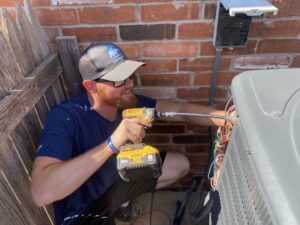 Regular seasonal maintenance matters more here than in milder climates, given how hard our summers and cold snaps push a system. A spring check before the heat hits and a fall check before the first cold front usually catches small issues, a slow refrigerant leak, a dirty coil, a failing capacitor, before they turn into a breakdown on the hottest or coldest day of the year.
If your system’s been struggling to keep up, or it’s just been a while since anyone’s actually looked at it, happy to come out and give you a straight read on what’s going on and what it’ll take to fix it.